It starts on the farm.
Cattle and pig slurry can be converted into biogas to generate electricity and heat. Choosing a plant starts with feedstock quantity, quality and year-round availability.


Loading the model…
A small-scale agricultural biogas plant for cattle and pig slurry. Use your farm’s resources to produce biogas, electricity and heat.
Concept model. The cutaway explains the operating principle.
Explore your farm’s potentialCattle and pig slurry can be converted into biogas to generate electricity and heat. Choosing a plant starts with feedstock quantity, quality and year-round availability.
The digester, technical container and pipework form a connected system. It works with suitable storage tanks and equipment that uses the energy on your farm.
Inside the heated, mixed digester, microorganisms break down organic matter without oxygen. The resulting biogas feeds a combined heat and power unit, which produces electricity and heat together.
Biogas is used to produce electricity and heat. Digestate can return to the nutrient cycle.
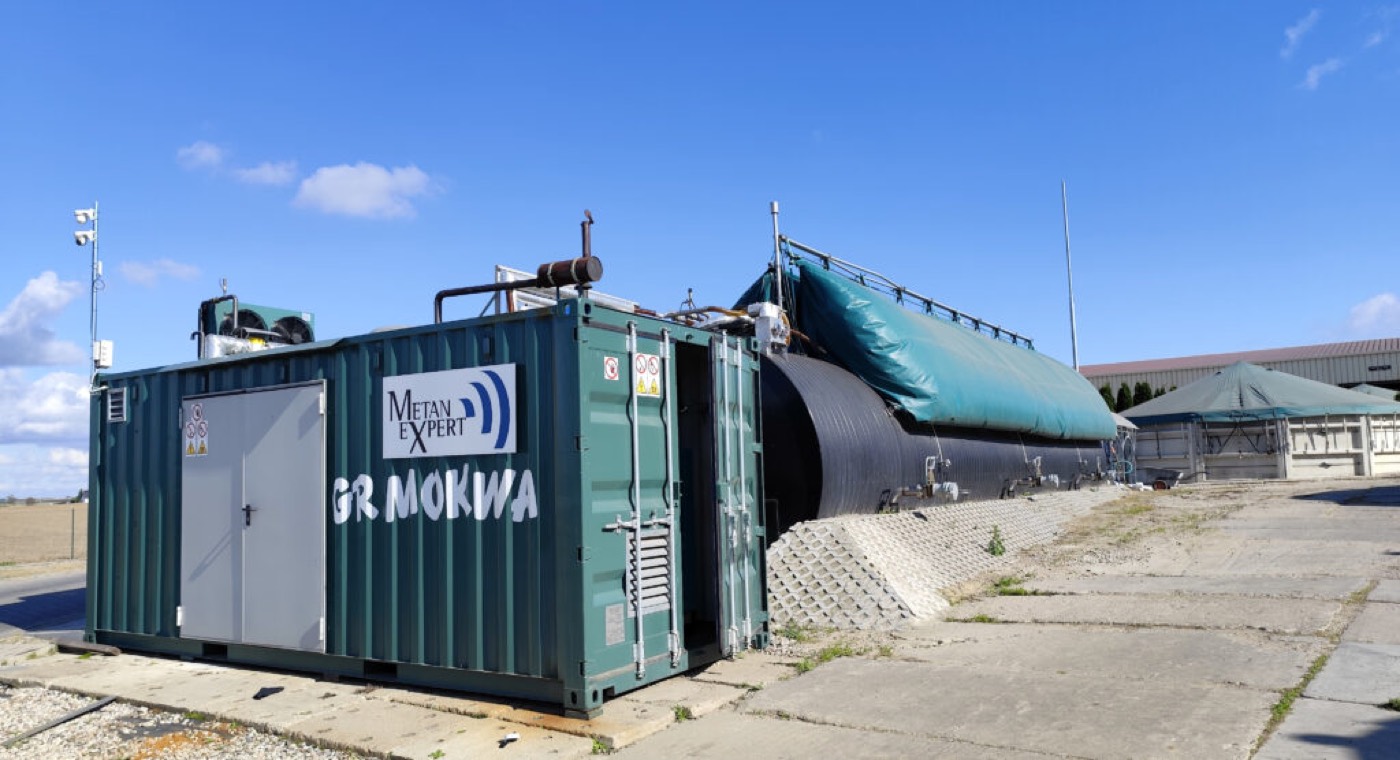
GR Mokwa in Subkowy. An MBG-20 with an electrical output of 20 kWe operates here. See the real installation and dated accounts from the farm.
See the projectFeedstock type and quantity, electricity consumption and potential heat users are the starting point. Prepare these details for an assessment, then compare the plant’s power and operating time.
Prepare your farm details20 kWe × 24 h × 365 / 1 000. A mathematical ceiling, not a net production or savings forecast. It excludes downtime, internal consumption and feedstock limitations.
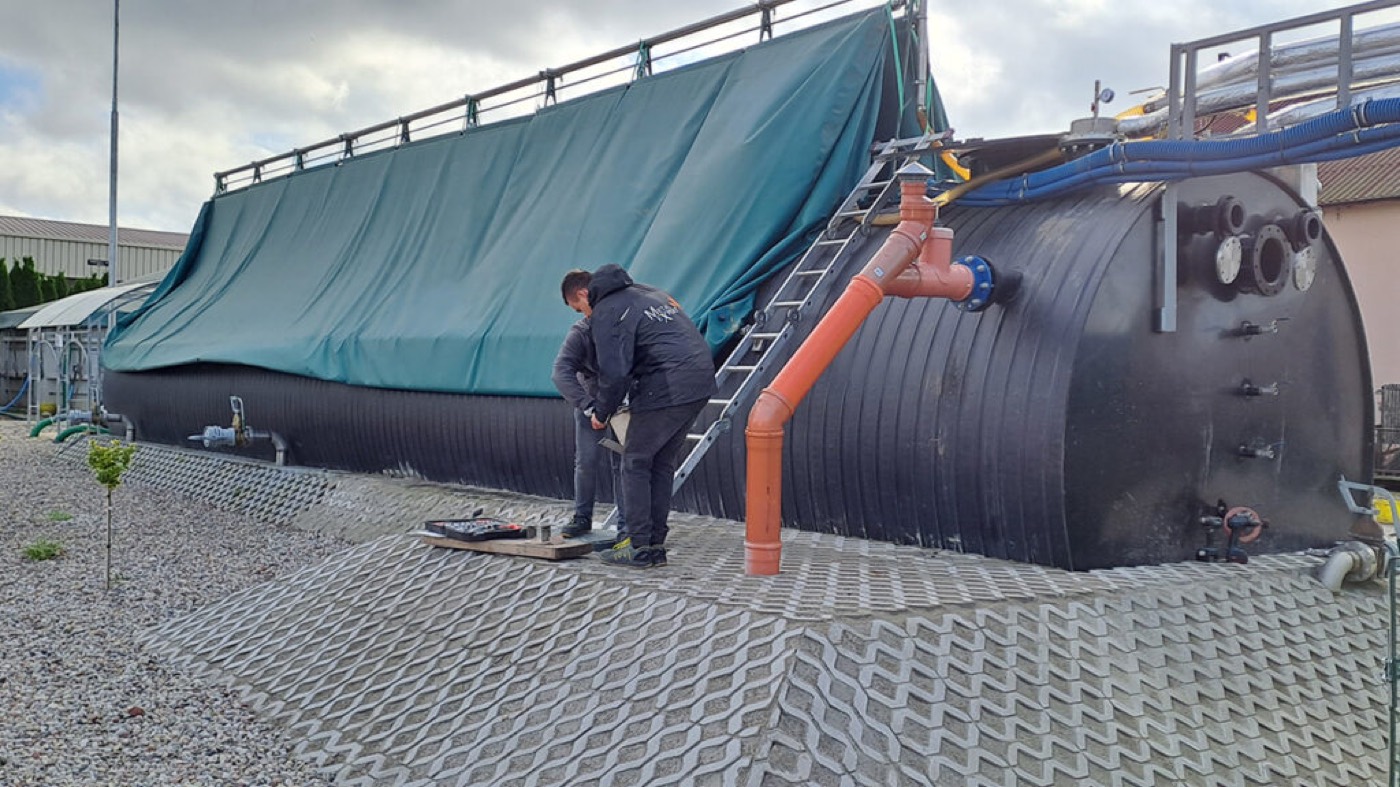
Feeding the system, checking its operation and scheduled tasks form the daily routine. Automation supports the operator; inspections and service are agreed for each installation.
TechnologySome heat sustains the digestion process. The remainder can be used on the farm, depending on temperatures and demand. This diagram shows possible uses, not energy quantities.
Building heating may add to year-round demand. The installation’s own heat requirements also determine how much remains available.
Heat for the process
Heat for the farm
Hot water, farm processes and building heating
Slurry type and quantity, year-round availability, electricity bills and potential heat users.
Analysis of feedstock, power options and energy use on your farm.
Project scope, site preparation, administrative requirements and available funding options.
Ground preparation, tank placement and connections.
Starting up, stabilising the process and preparing for operation and contact with the service team.
You do not need every technical parameter. Start with your feedstock, location and energy needs.
Prepare an enquiry